Bedding · Materials and comfort
Choosing Wool Bedding by Fill Weight, Climate, and Sleep Style
A comforter’s warmth depends on more than its label. Fill weight, fiber, shell fabric, construction, room temperature, and the sleeper beneath it all shape how a wool layer feels through the night.
At bedtime, the bedroom becomes a small climate of its own. The air may be cool, the mattress warm, and the person beneath the covers a source of changing heat and moisture. Wool bedding is valued in part because it can help manage that shifting environment. But wool comforters are not all alike: a light layer and a dense one can feel very different, even when both use wool as their main filling.
Fill weight offers a useful place to begin. It tells you how much filling is used in a particular comforter, or how much wool is present across a stated area. It does not, by itself, predict whether the bedding will feel right. Fiber type, quilting, fabric casing, bed-cover layers, and the temperature of the room all contribute to the experience. The most useful choice is therefore not simply the heaviest or the lightest option, but one that suits the conditions in which you sleep.
What fill weight can—and cannot—tell you
A higher fill weight generally means more filling, and more filling can provide greater insulation. That is a helpful broad principle, especially when comparing options made with similar materials and construction. A lightweight wool comforter may be a better starting point for a warm bedroom or a person who tends to sleep hot. A denser comforter may be more comfortable in a chilly room or for someone who often feels cold at night.
The comparison becomes less straightforward when products differ in size, fiber, or the way their fill is measured. Total fill weight and fill weight per unit of area are not interchangeable. A larger comforter may contain more wool overall simply because it covers more surface. Some descriptions provide a weight per square metre or per square yard; others give the weight of the filling for each size. If figures are available, check what they refer to before drawing conclusions.
Nor does more filling always mean better sleep. A comforter that feels cozy in a cold room may be too warm when the heating is on, when a duvet cover adds another layer, or when the sleeper naturally generates more heat. Consider the label as a clue, then set it alongside the room’s usual nighttime temperature, your sleep habits, and the rest of your bedding.
Start with the climate where you sleep
Climate is the larger setting, but the bedroom is the immediate one. People in the same region may sleep in very different conditions: one room may be drafty and unheated, another well insulated and consistently warm. Seasonal swings, heating and cooling systems, window exposure, and the number of layers on the bed can all change how a comforter performs.
In a warm climate, or a bedroom that stays warm overnight, a lighter wool layer may be easier to live with. It can provide a sense of coverage without as much insulation as a heavier fill. People who sleep hot may also find it useful to reduce other layers first: a thick blanket, a substantial duvet cover, or a mattress protector can affect the bed’s overall warmth.
In a cool room, more insulation may help maintain a comfortable layer of warmth. But cold sleepers should consider the whole sleep system rather than relying on one heavy comforter to solve every problem. A draft, cold mattress, or thin sheet can leave a bed feeling uncomfortable even when the top layer is substantial. Adjusting the room or adding a suitable layer may offer more flexibility than choosing a comforter that is too warm for much of the year.
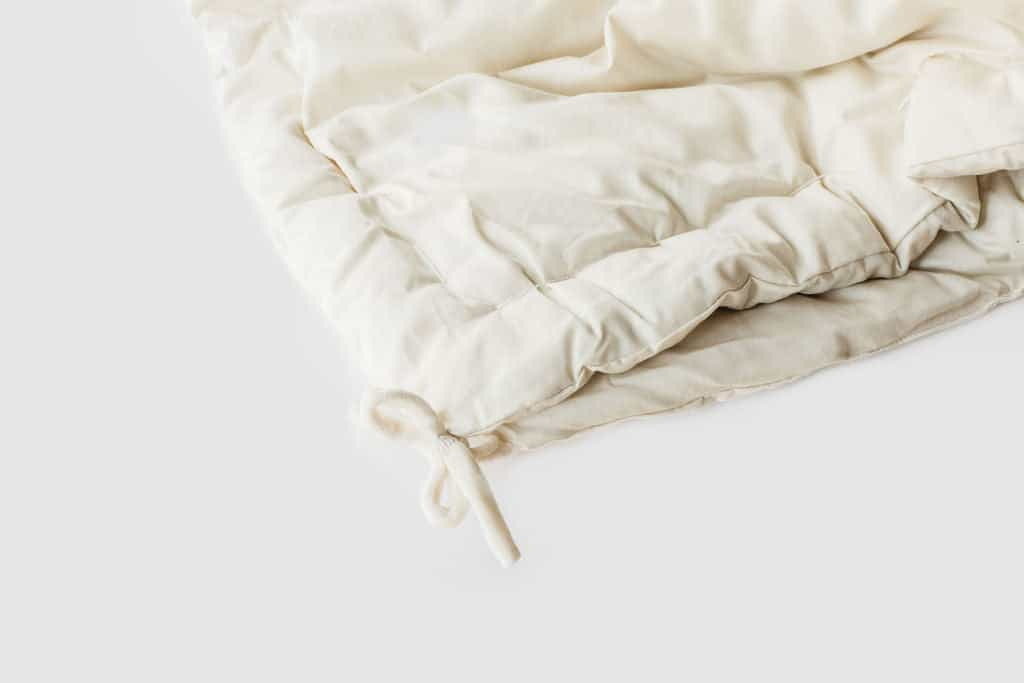
For climates with pronounced seasonal change, a layered arrangement can be practical. Two lighter pieces may be easier to adapt than one very heavy comforter: use one layer in milder weather and combine them when nights turn cold. Some wool bedding is designed specifically for this approach. The All-Season Wool Comforter, for example, has two quilted layers joined with cotton ties, intended to be used together in colder weather or separately as temperatures rise. Its listed wool weight varies by size, so the size-specific figures are more informative than a single total alone.
Think about the person under the covers
Sleep style includes more than whether someone prefers a soft or firm mattress. It also includes how quickly they feel warm, whether they wake up overheated, whether they share a bed with someone whose temperature preferences differ, and how easily they can adjust layers during the night.
A person who sleeps hot may prefer a lighter comforter, a breathable cover, and fewer insulating layers. Wool is often chosen for its capacity to absorb and release moisture, but no natural fiber can guarantee a cool night in every setting. Room temperature, humidity, clothing, mattress materials, and individual physiology still matter. If overheating is a regular concern, a lighter fill is one variable to test—not a substitute for considering the complete bed environment.
Someone who sleeps cold may be more comfortable with a heavier fill or with layers that can be added as needed. A comforter’s shell and construction matter here too. A closely quilted design may feel different from a lofty, more open construction, and the touch of the outer fabric can affect whether the bedding feels smooth, crisp, or substantial against the body.
Sharing a bed introduces another kind of climate. One sleeper may want more warmth while the other prefers less. Separate layers, or a comforter with divided warmth zones, can help make the bed more adaptable. The aim is not to find one universal temperature setting, but to give each sleeper a way to adjust without repeatedly changing the room or the bedding for both.
How wool behaves as bedding
Wool fibers have a structure that can hold air, helping wool filling provide insulation. Wool can also take up moisture vapor and release it, which is one reason it is commonly described as breathable or moisture-managing. These properties are useful context when comparing bedding, but they should not be treated as a promise that every wool comforter will feel the same.
Wool type and preparation influence the finished material, as do the amount of filling and its arrangement inside the casing. Some comforters use wool alone; others combine it with another fiber. A wool blend may differ in feel, weight, and care requirements from a product filled with wool only. Read the composition rather than assuming that the word “wool” describes every part of the bedding.
The term alpaca wool can also appear in bedding discussions. Alpaca fiber is distinct from sheep’s wool, although both are animal fibers used for warmth. Product descriptions may identify alpaca fill, wool fill, or a blend, and those details are important when comparing construction and care. A comforter filled with alpaca should not automatically be treated as identical to a sheep-wool comforter: the fiber source, processing, and manufacturer’s instructions may differ.
Shell fabric and construction shape comfort
The filling is only one part of a comforter. Its shell—the fabric enclosing the wool—affects the hand, airflow, durability, and the way the layer moves across the bed. Cotton is a common shell material. Weave, fabric weight, and finishing can make cotton feel crisp, smooth, or more substantial. A shell that feels comfortable against the skin may matter particularly to people who use a comforter without a duvet cover.
Quilting and tufting help hold filling in place. Without effective anchoring, a filling can migrate or bunch, leaving some areas flatter and others denser. Quilted patterns divide the surface into sections, while hand-tufting or ties can secure layers at specific points. Construction is not just a visual detail: it can affect how consistently the comforter covers the bed and how it behaves with regular use.
Layered designs introduce their own practical details. Ties at corners or along the sides can keep separate layers aligned, while corner loops or ties may secure a comforter inside a duvet cover. These features are worth noting if you move around during sleep, frequently change covers, or want to use the bedding in more than one configuration.
Choose by use, not by the season name alone
Labels such as lightweight, medium, or all-season are useful shorthand, but they are not universal temperature measurements. One maker’s “all-season” may feel warmer than another’s because fill weight, shell fabric, quilting, and sizing differ. Think of the label as a description of intended use, then look for the specifications that explain how the item is built.
- For a warm bedroom: Consider a lighter fill and avoid adding multiple insulating layers by default.
- For a cool bedroom: Compare denser fills or a layerable design, and account for drafts and the warmth of the rest of the bed.
- For changing seasons: A two-layer arrangement can offer more adjustment than one fixed-weight comforter.
- For people who sleep hot: Start with a lighter setup and consider the shell, duvet cover, and other layers together.
- For people who sleep cold: Look at fill weight and the full bed environment, rather than relying on a warmth label alone.
If you already own a comforter, notice when it feels too warm or too cool before replacing it. Is the problem constant, or does it occur only during a particular season? Does it change when the duvet cover is removed or the room temperature shifts? A few nights of observation can help distinguish a fill-weight issue from a room or layering issue.
Care is part of the decision
Natural-fiber bedding often benefits from careful maintenance. Wool comforters may have specific limits on washing, drying, and cleaning. Some instructions call for spot cleaning and airing; others permit a very particular washing method. There is no single care rule that applies to all wool bedding, so follow the instructions supplied for the specific item.
A duvet cover can help protect a comforter from everyday soil and reduce how often the inner layer needs attention. It also makes it easier to change the bed’s look or add a washable barrier between the comforter and the sleeper. Check that the cover fits the comforter and that its own fabric and weight do not make the bed too warm.
Air drying deserves particular attention when care instructions require it. Wool can be sensitive to heat and rough handling, and a comforter’s inner filling may remain damp after its outer fabric appears dry. Avoid assuming that a home washer or dryer is suitable simply because another wool item tolerates it. When a label specifies spot cleaning or professional laundering, that guidance is part of the bedding’s practical cost and should factor into the choice.
A careful comparison checklist
When comparing wool bedding, put the details side by side. Start with the listed fill weight and check whether it is given per area or as a total for a particular size. Then compare the fiber composition, shell material, construction, dimensions, and care directions. Finally, ask how the comforter will work with your room, sleep habits, duvet cover, and other layers.
- Is the filling wool, alpaca, or a blend, and does the description specify the proportions?
- Is the fill weight stated clearly, and does the figure match the size you are considering?
- Does quilting, tufting, or another construction detail help secure the filling?
- What is the shell made from, and how might its feel or weight affect the bed?
- Can the comforter be layered or separated as the weather changes?
- What cleaning and drying methods are permitted, and are they manageable for your household?
The right warmth is a moving target
A bed is not a static system. The room changes with the weather; the body changes temperature through the night; and a duvet cover, sheet, mattress, and sleepwear all influence the result. A wool comforter’s fill weight can help estimate its role in that system, but it is not a stand-alone measure of comfort.
For many households, flexibility is the most useful quality. A lighter layer can suit warm conditions, while a second layer can be added when the air cools. A single denser comforter may make sense in a consistently cold room, while a lighter fill may be easier to manage for a warm sleeper. What matters is the relationship between the bedding and the person using it.
Choose with the room in mind, read the specifications closely, and treat warmth labels as guides rather than guarantees. Fill weight gives the comparison a starting point. Fiber, construction, care, and sleep style complete the picture—and turn a general description into a considered choice for the nights ahead.