Bedding · Materials and care
How Healthy Choice Medium-Weight Wool Bedding Suits Cold Nights
When night air cools a room, a comforter’s warmth depends on more than its label. Fill weight, fiber structure, the fabric around the fill, and the way the bedding is cared for all shape how it feels from one season to the next.
There is a particular quiet to a cold night. The room settles, the window glass cools, and the bed becomes a small landscape of its own: a sheltered place where warmth matters, but so does the ability to let excess heat and moisture escape. A medium-weight wool comforter is designed for this balance. It offers more insulation than a light summer layer without necessarily creating the enveloping heaviness of a winter-weight bedcover.
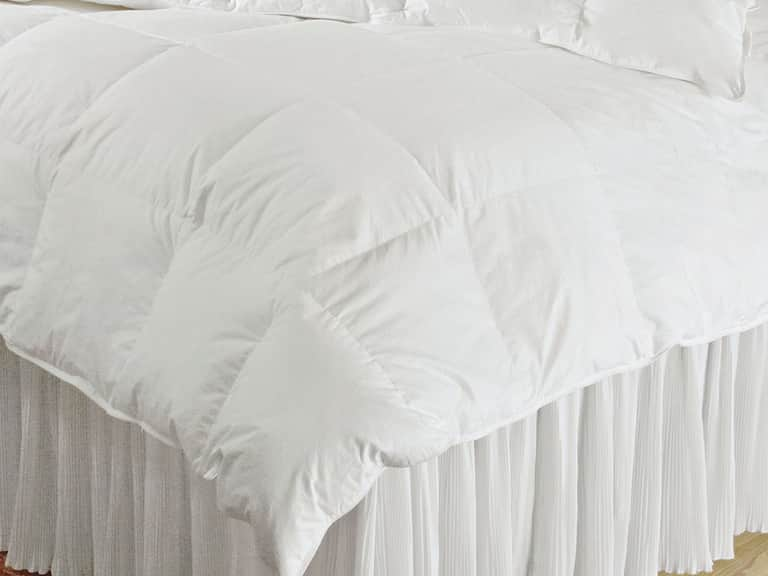
The Healthy Choice Medium Weight Wool Comforter provides a useful example of how these choices work together. Its stated fill weight is 350 grams per square meter, and its cover is made from organic cotton sateen. The wool is quilted within the comforter, while the product’s care guidance calls for spot cleaning, occasional airing, and the use of a removable comforter cover. These details do not promise the same experience for every sleeper or bedroom. They do, however, help explain how the bedding is intended to provide warmth and how its materials can be looked after.
Understanding those details is worthwhile before a cold spell arrives. Fill weight offers a clue about insulation, though not a complete prediction of comfort. Wool’s ability to hold air and manage moisture contributes to its distinctive feel. Cotton shapes the surface that touches the sleeper. And gentle, restrained care can help protect the loft and construction that make the comforter useful in the first place.
What 350 g/m² says about a comforter
Fill weight describes the mass of filling distributed across a given area. In this case, 350 grams of wool fill per square meter gives a concrete point of comparison: it is a measure of how much wool is present in the comforter’s surface area. It is not, by itself, a warmth rating or a guarantee that the bedding will feel comfortable at a particular room temperature.
That distinction matters because a comforter is a system, not simply a pile of fiber. The type and condition of the wool, the way it is processed, the quilting pattern, the density and weave of the outer fabric, and the size of the bed all influence the finished layer. So do the sleeper’s preferred room temperature, sleepwear, mattress, and other bedding. A number can orient a decision, but it cannot describe the whole night.
Still, the 350 g/m² specification is helpful when thinking about the Healthy Choice design. The product is described as medium weight, with more wool fill than a lightweight version. That additional fill can provide more insulating material between the sleeper and the cooler room. It may suit people who want a warmer layer in winter or in bedrooms that become chilly, while those who sleep hot or keep their room warm may prefer a lighter arrangement. Personal comfort remains the best measure: one person’s welcome warmth can be another person’s too much.
It is also useful to distinguish fill weight from total comforter weight. The fill measurement refers to the wool per square meter, not necessarily the complete object’s weight in a particular size. The cotton shell, stitching, and dimensions contribute to the overall weight. When comparing bedding, check whether specifications refer to fill, fabric, or the finished comforter, and compare like with like wherever possible.
The quiet work of wool fibers
Wool’s reputation for warmth is rooted in its structure. Individual fibers and the wool batting formed from them can hold pockets of still air. That trapped air slows the movement of heat, helping create an insulating layer around the body. In a bed, this does not mean that wool generates heat; rather, it helps retain warmth produced by the sleeper and the bedding system.
Wool is also known for interacting with water vapor. The fiber can take up some moisture from its surroundings before feeling wet, a quality that may help a bedding layer feel less clammy than materials that hold moisture at their surface. The effect depends on the room, the sleeper, and the product’s construction. It should not be confused with active temperature control: wool cannot compensate for every source of overheating, an overly warm room, or bedding that is too heavy for the conditions.
On a cold night, these characteristics work in a measured way. The wool helps retain a pocket of warmth while allowing some movement of air and moisture through the bedding. That combination can be appealing to sleepers who dislike the sealed-in feeling that some highly insulating layers create. But fibers are only part of the picture. A tightly finished shell, the density of the fill, and the quilting all affect how the comforter drapes and breathes.
The Healthy Choice comforter is described as having a wave pattern that keeps the wool evenly distributed. Quilting matters because loose fill can migrate over time, leaving thinner areas and uneven warmth. Stitching divides or secures the filling so it is less likely to gather in one place. With any quilted comforter, gentle use and appropriate care help preserve the arrangement of the fill.
Why the cotton casing matters
The outer shell is the first textile a sleeper encounters, and it also contains the wool fill. The Healthy Choice design uses organic cotton sateen, described as soft and durable. Sateen refers to a weave structure that gives cotton a smooth surface and a subtle sheen. Its hand can feel different from the crisp, matte touch often associated with percale, even though both fabrics can be made from cotton.
A shell has several jobs. It should be comfortable against the skin, strong enough to contain the fill, and closely woven enough to limit fiber escape during ordinary use. Its construction can influence the comforter’s drape and the way air moves through the surface. The cotton casing also contributes to the finished bedding’s overall feel: the wool may provide the insulating body, but the shell frames that experience.
Organic certification and fabric composition are useful pieces of information, but they are not substitutes for understanding the whole product. Certification applies to defined materials and production requirements, while durability and day-to-day comfort also depend on construction and use. A removable duvet cover adds another layer between the sleeper and comforter, helping shield the cotton shell from skin oils, spills, and routine soil.
Matching medium-weight bedding to a cold night
“Cold night” can describe very different conditions. A drafty room with a low thermostat is not the same as a well-insulated bedroom that cools only slightly after sunset. A sleeper who runs cold may welcome a medium-weight comforter in a room where someone else would be comfortable under a lighter layer. The practical question is not simply whether a product is warm, but whether it suits the conditions and the person using it.
Think first about the room’s usual temperature, then about how the bed is already layered. A mattress protector, sheets, pajamas, and any blankets beneath or above the comforter all contribute to the sleep climate. If the bed is consistently too warm, removing a layer may be more effective than changing the whole arrangement. If it is too cool, a medium-weight wool comforter may offer added insulation without requiring several loosely stacked blankets.
Consider how warmth changes through the night, too. Bedrooms can lose heat after the heating system cycles off, while body temperature and sleep comfort can vary over several hours. A comforter that feels ideal at bedtime may feel different near dawn. A duvet cover can make the arrangement easier to maintain and can be changed or washed separately, while additional blankets provide adjustable warmth on especially cold evenings.
Finally, look at the comforter’s dimensions and how it fits the bed. A layer that is too small may leave shoulders or feet exposed when it shifts. A larger comforter can provide more coverage, though it will also contain more material overall. Fit, fill, and the room’s temperature belong in the same decision, rather than being considered separately.
Care guidance that protects the bedding
Natural fibers often reward a light touch. The Healthy Choice Medium Weight Wool Comforter’s care instructions advise against washing the comforter and recommend spot cleaning with a small amount of light soap and very little water. The guidance also suggests airing it twice a year, hanging it outside in fresh air and placing it in direct sunlight. A comforter cover is recommended to help keep the bedding clean.
Spot cleaning is a targeted response to a small mark, not an invitation to soak the full comforter. Apply the least moisture needed, use mild soap, and avoid vigorous rubbing that could disturb the shell or filling. Blot gently, then allow the treated area to dry fully before returning the comforter to the bed or putting a duvet cover on it. Always follow the care label supplied with the specific item, since materials and construction can differ from one wool comforter to another.
Routine airing is different from laundering. Fresh air can help release everyday odors and restore a fresher feel without putting the filled bedding through a wash cycle. Choose a dry day, support the comforter so its weight is distributed, and avoid leaving it exposed to damp conditions. The product guidance specifically mentions direct sunlight; for any natural textile, it is sensible to avoid unnecessary prolonged exposure that could affect color or fibers. Use judgment and follow the manufacturer’s instructions.
Wool fill can be vulnerable to harsh or unsuitable cleaning. Excessive agitation, high heat, or a long period of dampness may affect the fiber structure and the comforter’s shape. Because the wool is secured inside the quilted construction, forcing the entire item through a cleaning method that is not recommended may also put stress on stitching and distribution. If a substantial spill or stain cannot be addressed with careful spot cleaning, consult the maker’s current care advice or a qualified professional before proceeding.
A duvet cover is one of the simplest ways to reduce how often the comforter itself needs attention. It takes the daily contact and can usually be removed for laundering according to its own care instructions. Corner ties or other securing details, where present, can help keep the insert from shifting inside the cover. A well-fitted cover also protects the shell from dust and accidental marks, while allowing the comforter to remain in service between routine refreshes.
A simple seasonal routine
Comforter care does not need to become an elaborate ritual. A brief seasonal check can help catch small issues before they become difficult to manage. Begin by removing the duvet cover and checking the shell for spots, loose seams, or areas where the fill appears uneven. Follow the care label for cleaning, and avoid making assumptions based on the instructions for a different wool product.
- Protect it during everyday use: Keep the comforter inside a washable cover and make sure it is secured so it does not bunch.
- Address marks promptly: Use the recommended spot-cleaning approach, with minimal moisture and gentle handling.
- Air it when appropriate: Choose dry conditions and give the comforter enough space to air without being folded tightly.
- Check the construction: Look for changes in quilting, stitching, or fill distribution, and seek care advice if something seems wrong.
- Store it fully dry: When the season changes, make sure the comforter is clean and dry before storing it in a breathable, protected space.
This routine favors prevention over frequent washing. It also respects the fact that wool bedding is not necessarily cared for like a lightweight cotton blanket or a synthetic comforter. The correct method depends on the product’s materials and instructions. When information on the label differs from general advice, the label for that specific item should take priority.
What “hypoallergenic” and “temperature regulating” can—and cannot—mean
Natural-fiber bedding is sometimes described with broad terms such as “hypoallergenic” or “temperature regulating.” Such phrases need context. People can react to different fibers, dust, detergents, or other parts of a sleep environment; no bedding description can guarantee that an individual will have no reaction. Anyone with a known wool sensitivity or significant allergies should consider their own history and seek appropriate medical guidance when needed.
Likewise, temperature regulation is a description of how materials may help manage warmth and moisture, not a thermostat built into the comforter. A wool fill may help create a more balanced microclimate for some sleepers, but the result depends on the person, room, shell, layering, and conditions. It is more useful to treat these qualities as material characteristics than as promises of a particular sleep outcome.
That careful reading applies to product specifications in general. “Medium weight” is a category, not a universal standard across all bedding makers. The stated 350 g/m² fill weight offers a more concrete reference, but construction and personal preference still determine whether the comforter feels right. Comparing material details, care instructions, and the intended use gives a clearer picture than relying on a single label.
A considered layer for cooler weather
The appeal of medium-weight wool bedding lies in the interplay of its parts. The Healthy Choice comforter’s 350 g/m² wool fill provides a defined quantity of insulating material. Its organic cotton sateen casing gives the fill a smooth protective shell, while the quilted construction is intended to keep wool distributed across the comforter. Together, these features create a bedding layer designed for warmth without relying on weight alone.
For cold nights, the best result comes from matching that layer to the bedroom and the sleeper. Consider existing blankets, room temperature, personal warmth preferences, and the comforter’s fit. Then protect the bedding with a removable cover, spot clean only as directed, and air it periodically rather than washing it unnecessarily.
Good bedding is often most successful when it recedes into the background. It holds warmth without demanding attention, stays comfortable as the hours pass, and remains in good condition through careful use. Understanding fill weight, fiber behavior, cotton casing, and care instructions turns a simple choice of comforter into a more informed decision—one that begins with the texture of the materials and ends, on a cold night, in a quieter and better-prepared bed.